

1. Topographic/Site Model

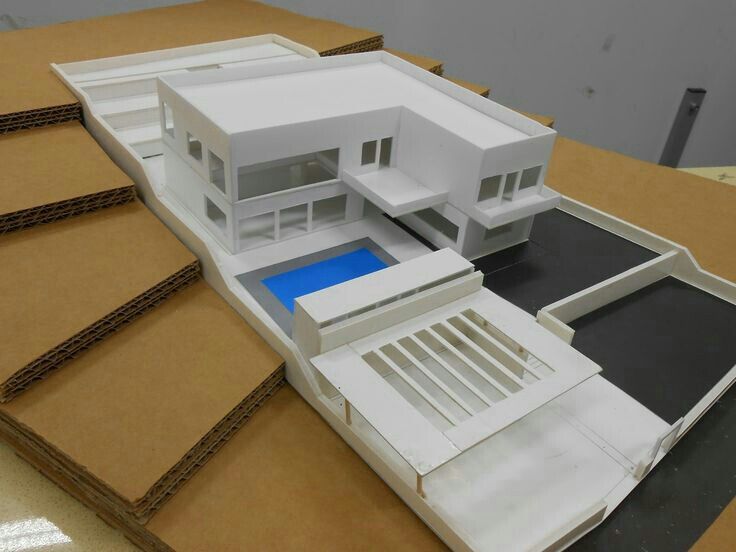
This model highlights the terrain, its topography, its contours, and how the building integrates into its surroundings. It is particularly useful from the earliest stages of a project for:
-
Analyze the site's levels, slopes, and drainage.
-
Explore how the building's volume interacts with the terrain and access points.
-
To allow an overview of the context before the fine details.
-
For example, we cut out the contour lines of the site, we superimpose layers to recreate the relief.
2. Exterior model of the building


This model generally represents the final volume of the building: its facades, roofs, windows, and relationship to the environment. It serves to:
-
Presenting the appearance, material, or volume to a client or jury.
-
Testing design options such as the layout of openings and proportions.
-
The scale may vary (e.g. 1:100, 1:200) depending on the use.
3. Interior model


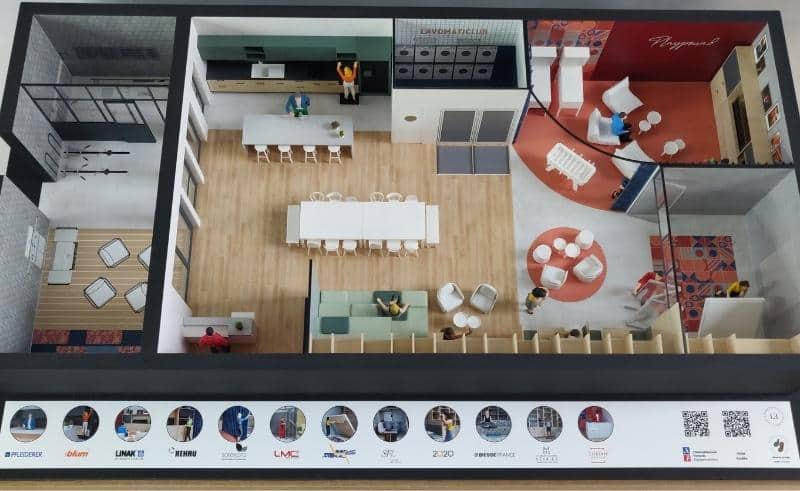
When the project requires showing the interior layout, this model focuses on the internal volumes, furniture, circulation, and sometimes the materials. It allows us to:
-
Visualize and test the functionality of interior spaces.
-
Engage in dialogue with the client regarding the use of spaces (circulation, light, atmosphere).
Often done on a larger scale (e.g. 1:50 or 1:20) for more detail.
4. Landscape model / exterior design


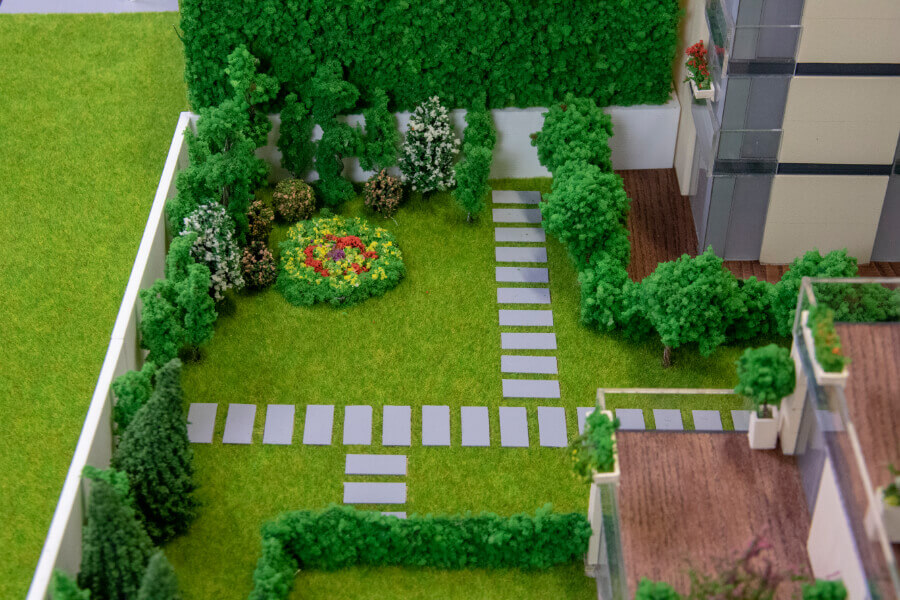
This model focuses on the environment surrounding the building: green spaces, vegetation, street furniture, roads, etc. It is useful for:
-
Plan and communicate the outdoor layout (parks, gardens, pedestrian links).
-
Show the visual impact of vegetation, landscapes or light on the project.
It often complements the exterior or site model.
5. Conceptual/Mass Model

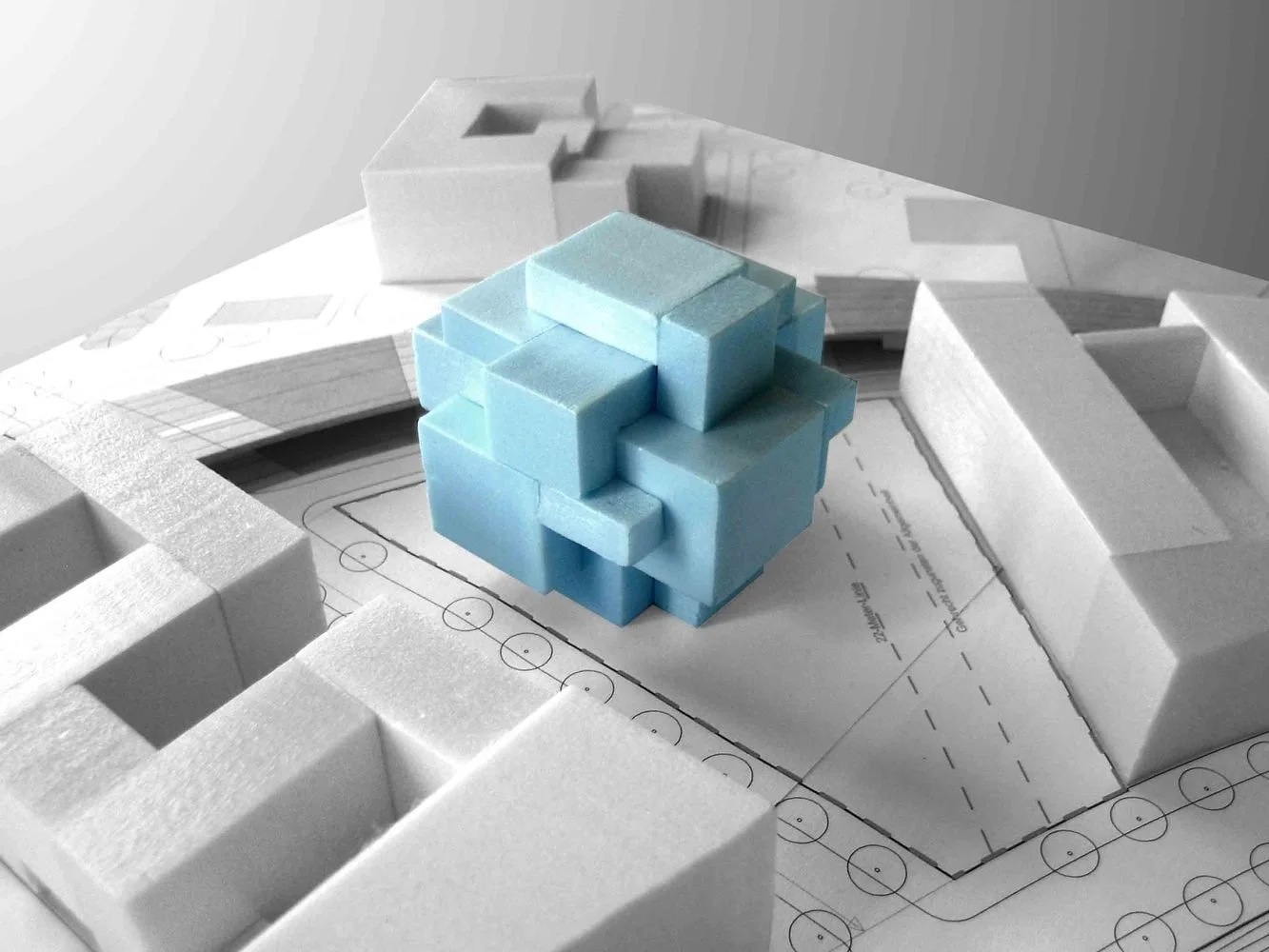
At the very beginning of the project, before the details are worked out, a simple model is often used that highlights the volumes, the mass, and the relationship to the site, without necessarily including any finishes. It allows us to:
-
Quickly explore several volumetric solutions.
-
Communicate the architectural intention clearly.
-
The materials are often simple (cardboard, foam) and the scale can vary depending on the need.
6. Detailed presentation model
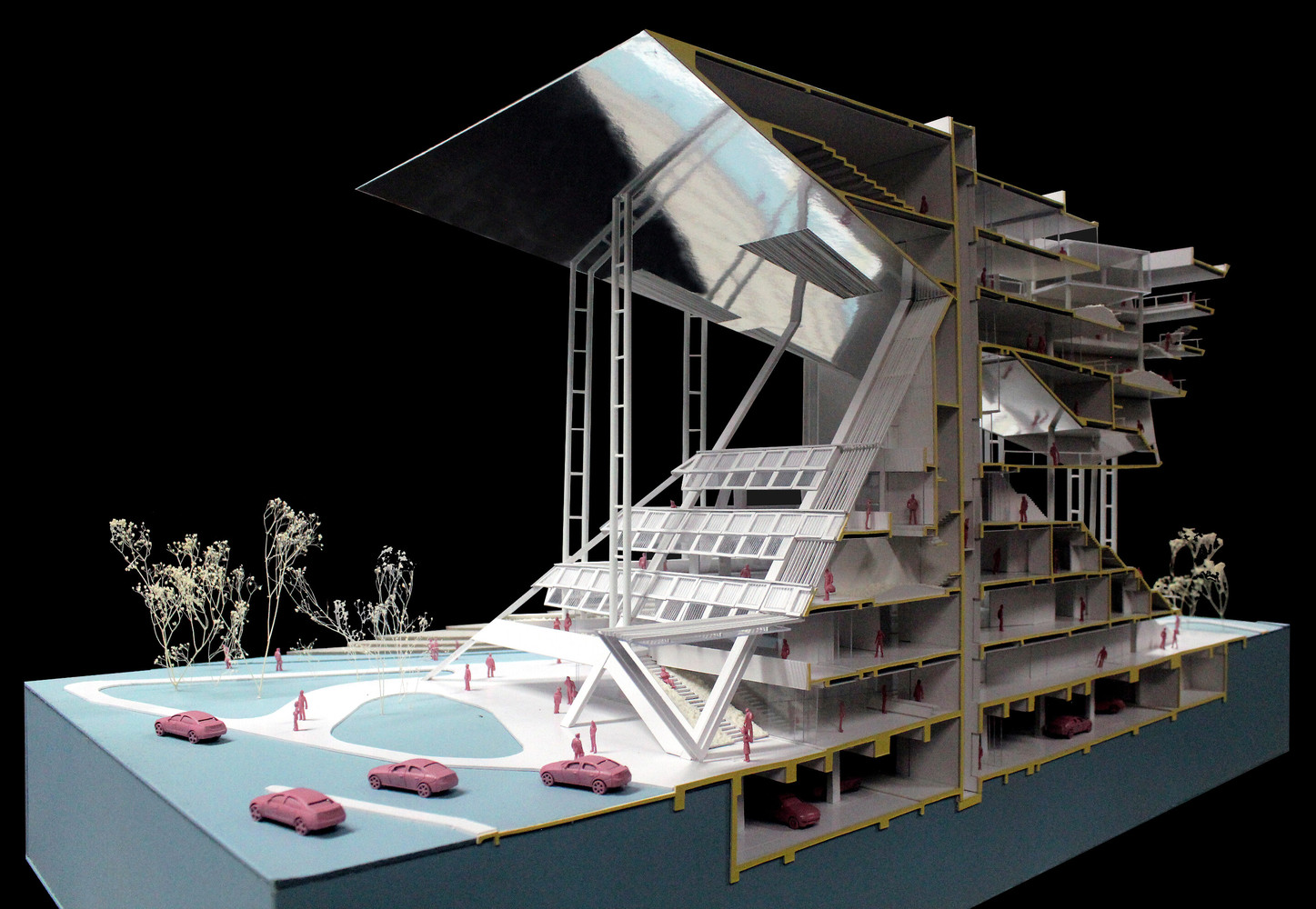
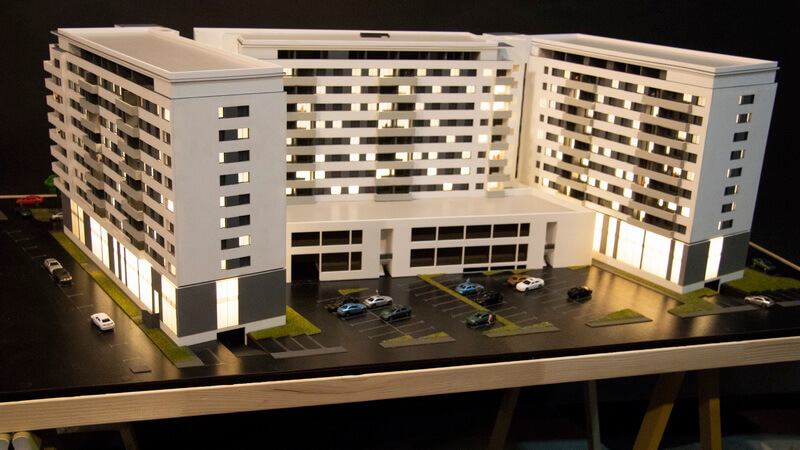
This model is designed to "sell" or showcase the project in its most refined version: finishes, materials, textures, landscape, lighting. It is ideal for clients, competitions, or exhibitions. It allows you to:
-
To provide a very realistic preview of the finished building.
-
Demonstrate a high level of visual finish.
-
This is often one of the final phases before the actual construction.
In summary
Each type of model has its purpose in the architectural process:
-
the topographic model to understand the site,
-
the exterior model for the building itself,
-
the interior model for use and space,
-
the landscape model for the external design,
-
The conceptual model for quickly testing ideas,
-
the presentation mockup for the final communication.
These models can be physical or digital , 3D printed or handmade depending on the level of detail and resources.
For students, architects or designers, knowing when to use each type of model is an asset for your projects.